


COCODRILLS | CAR 2026 #03
The architecture of unpredictability
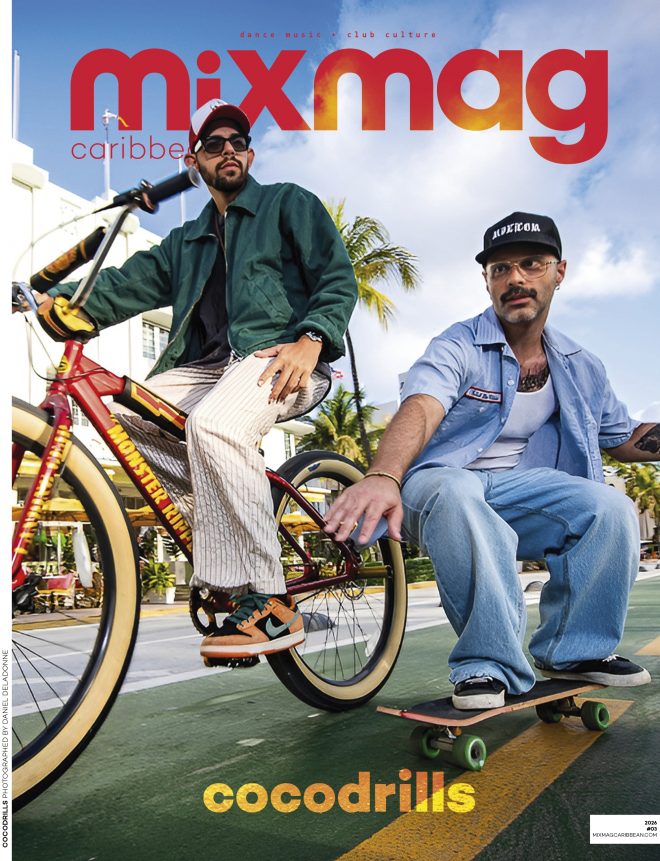
The booth rarely contains what Cocodrills bring into it. Their sets expand outward, reshaping the room in ways that feel both immediate and elusive, as if each moment is being built and dismantled simultaneously. There is a physicality to how they play, not just in movement but in structure, where loops stretch beyond expectations and familiar sounds return, altered and reframed. Nothing settles for long. The dancefloor responds in fragments first, then in waves, pulled into a rhythm that refuses predictability while never losing its sense of control.
Across nearly two decades, that approach has moved with them rather than calcified into identity. Their sound travels fluidly through the house spectrum, shifting between obscure selections and reworked material without signaling the transition. What holds it together is not genre but intention, a commitment to shaping sets as living forms rather than fixed sequences. In the studio, that same instinct continues, driven by constant input from outside music itself. Fragments of media, unexpected textures, and passing references are absorbed and reassembled into something that feels both personal and deliberately unstable.
Miami remains the axis around which everything turns. Long-term residencies at spaces like Club Space, Nocturnal, and Heart Nightclub placed them within the city’s evolving nightlife rather than on its periphery, forcing relationships with audiences that extended beyond single appearances. While international bookings in Ibiza, Amsterdam, and Dubai expanded their reach, it is the repetition of local rooms that sharpened their awareness, week after week, crowd after crowd. Their ongoing Sunday residency at 1-800-Lucky, now approaching its eighth year, reflects that continuity, a sustained dialogue rather than a fixed performance.
In conversation, that sense of movement carries through. Adam and Chris speak in a way that mirrors their sets, circling ideas of tension, adaptability, and instinct without reducing them to simple definitions. They often return to the mechanics of connection, how unpredictability is managed, how crowds are tested, and how memory is constructed through sound. The discussion moves between the booth and the studio, between Miami and the wider circuit, tracing a trajectory that resists clean narrative. What emerges is less a summary than an extension of their process, open, responsive, and still unfolding.
CONTROLLED UNPREDICTABILITY
The room doesn’t settle when Cocodrills take control. Time becomes elastic, shaped less by BPM than by instinct, by the quiet negotiations happening between two people who have spent nearly twenty years learning how to listen to each other without speaking. What unfolds in their sets rarely resembles a sequence of tracks. It feels closer to construction, something assembled in motion, where fragments of sound are pulled apart and reintroduced before the floor has time to understand what it’s hearing fully.
Adam describes that experience with a kind of deliberate looseness, resisting the urge to define it too cleanly.
“I would define the Cocodrills experience as energetic, unpredictable, and unexpected. The process starts in the studio where we’re constantly consuming all forms of media for potential samples or anything that strikes us as interesting, cool, different, or even funny. I love it when people approach us and ask, ‘What was that!?’ Relentlessly scouring for new music helps us deviate from the status quo. I believe the delivery of this combination of elements leads to the moments that live in the listener’s mind long after the set is over.”
That sense of memory, of something half-recognised and slightly distorted, sits at the core of what they build. It is less about selection than about displacement.
Inside the booth, that displacement depends on a balance that is never fully stable. Their setup invites risk. Live sampling folds into evolving drum sequences, loops are introduced and stripped back in real time, and the architecture of a set can shift within seconds. Yet control is never abandoned. It is redistributed between them, passed through small gestures and an accumulated trust that no longer requires explanation.
“We sometimes use subtle hand signals or vocalize our next moves to each other in the booth, but after nearly 20 years as a duo, there’s an unspoken synergy where I can sense what Chris is going to do and respond accordingly, and vice-versa. I would say the spontaneity is always sculpting the shape of our sets and the unpredictability is in widening the scope of the sound and subverting expectations.”
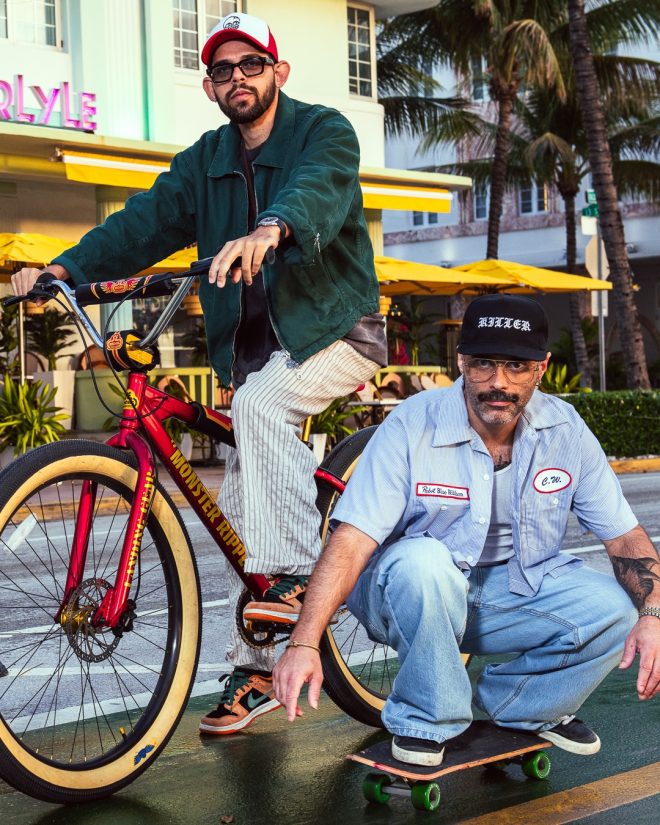
What emerges is a system that remains open enough to surprise them.
That openness becomes most visible in the way they handle tension. Chris speaks about it as something foundational, a material to be stretched rather than resolved too quickly. The dancefloor becomes a surface that reflects back those decisions, offering subtle cues that guide the next move.
“Tension is foundational to our sound. Stretching it as far as possible is a delicate balance of testing the crowd’s patience. If we do it right, the dancefloor will provide the feedback. Every crowd has its own unique expectations, and prodding their limits helps us determine the direction of the set.”
Release, in that sense, is never accidental. It is constructed through restraint, through the willingness to hold a moment just beyond comfort until it begins to fracture.
MIAMI, MEMORY, AND MOVEMENT
Miami remains the ground where that instinct was formed. It is not framed as an origin story so much as a constant presence, something embedded in their decisions, whether they acknowledge it directly or not. Chris speaks about the city with clarity, without romanticism.
“We both grew up in Miami. It’s evident that the local scene is proudly ingrained into our identity. I love Miami and can’t see myself living anywhere else. Surviving a perpetually changing landscape and navigating through relentless waves of international bookings unquestionably requires a tremendous amount of resilience and adaptability. It certainly couldn’t have been done without the help of our phenomenal management team. We came along just as the concept of the weekly local headlining DJ was disappearing, so early on we were willing to play anywhere and everywhere. I believe this helped us build a following that was foundational to multiple local residencies.”
The city demanded persistence, and in return offered a kind of long-term understanding of crowds that cannot be replicated elsewhere.
Residency, for Cocodrills, becomes a form of dialogue rather than repetition. It carries a different kind of pressure, one that accumulates over time as familiarity grows. Adam approaches local sets with a heightened awareness of memory, of what has already been heard and what needs to be reimagined.
“I feel greater pressure for local gigs over one-off international bookings. When I’m playing somewhere new, I feel I have more freedom to dig deep into my bag and pull out anything I want, because to those crowds, everything is fresh. Locally, we have a lot of fans who come to see us weekly and there’s stress to not repeat yourself. In a way, it’s good because it forces us to continue to explore new avenues and not rely on a routine. Over the years, we’ve grown with many of our followers, but we acknowledge that as you get older than the crowds you used to serve, it’s essential to not lose that connection to emerging generations.”
The relationship becomes cyclical. The crowd evolves, and the artists are required to evolve with it or risk losing that connection.
Outside Miami, that adaptability takes on a different shape. The context shifts, the expectations reset, and the same instincts are tested against unfamiliar environments. Chris frames this as an extension of their identity rather than a departure from it.
“Our identity is adaptability. I try to focus on keeping the range of our sound as extensive as possible within the broad parameters of house music; it’s a reflection of my music taste in general. It may seem like an easy answer, but my first time playing in Ibiza exposed me to another level of energy I was unaware of. Their receptiveness to new and different sounds gave me a boost of confidence that I could bring that same energy back home.”
That moment in Ibiza expanded the scale at which they understood their own approach.

CONTINUITY, INSTINCT, AND WHAT COMES NEXT
The tension between familiarity and discovery runs through their selections as well. Their sets move easily between unreleased material and fragments of recognisable sound, reshaped until their original context becomes secondary. Chris approaches that balance without hesitation.
“Compromising credibility is just not something I consider. It doesn’t matter what depth of the scene the music originated from; if it’s good, I’ll play it. I find that the line between ‘underground’ and ‘commercial’ has been heavily blurred. When presented in an alternate manner like a mashup or remix, nostalgia is a powerful emotional resource for our sets.”
Familiarity becomes a tool, a way of accessing collective memory while still maintaining control over how it is experienced.
In the studio, that same fluidity continues, though the pace changes. The immediacy of the booth gives way to something more introspective, more deliberate in its construction. Adam describes the process as layered, moving between roles without fully settling into any of them.
“Creating something memorable is the goal, which admittedly isn’t always easy. Building tracks is a very personal experience that I believe requires a lot of self-awareness and introspection. Lately, I’ve been making a greater effort to filter my influences by what genuinely moves me emotionally, and not just what is ‘hot’ now.”
The emphasis shifts toward internal response rather than external validation, a recalibration that mirrors the unpredictability of their live sets in a quieter form.
Longevity, in this context, feels less like an achievement and more like a byproduct of consistency. Nearly two decades in, the decisions that sustain them remain grounded in instinct rather than strategy. Chris articulates that continuity with a clarity that avoids nostalgia.
“Never wavering from my instincts, moving adjacent to trends, remaining authentic to ourselves, respecting those that helped us climb the ladder, and most importantly, appreciating the fans.”
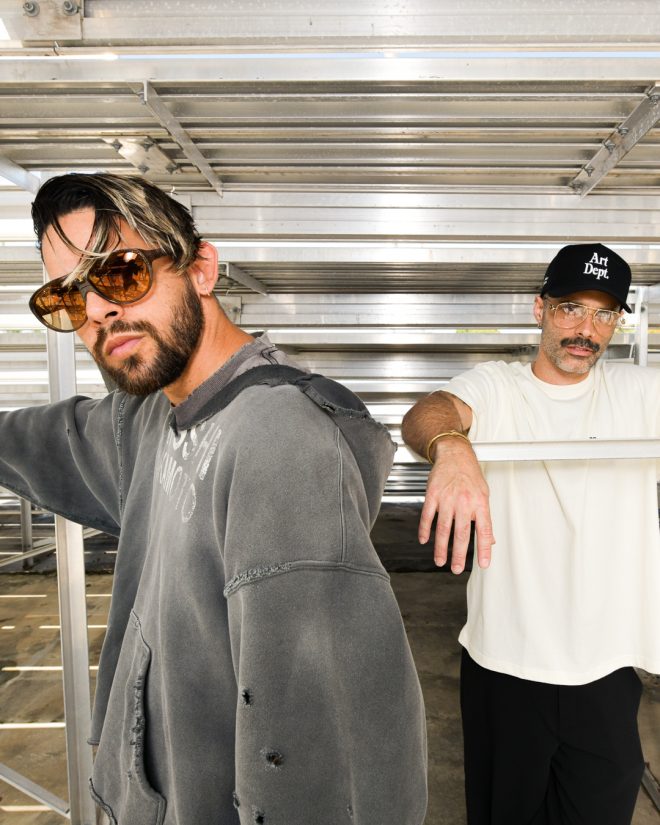
There is no attempt to frame their trajectory as exceptional. It reads as a series of choices made repeatedly, each one reinforcing the last.
The next phase unfolds through small shifts, subtle expansions that keep the structure intact while allowing new elements to enter. Adam’s focus moves toward texture and presence, toward elements that introduce a different kind of vulnerability into their sets.
“Sonically, I’d like to aim for more harmonic content. Conceptually, I want to incorporate live vocals into our sets. It’s something I’ve been thinking about for a long time, but I haven’t had the courage. I think it could be fun.”
That hesitation becomes part of the narrative, a reminder that evolution often begins with uncertainty rather than certainty.
Nothing in Cocodrills’ trajectory suggests a fixed endpoint. Their sets continue to reshape themselves, responding to rooms, to cities, to the quiet signals exchanged between them in the booth. The structure holds, but it remains open, allowing space for deviation without losing coherence. What persists is a way of working. A willingness to stay in motion, to let unpredictability remain a central force rather than something to be controlled.
