


Interview with Julia Sandstorm
After an intense year of touring, the artist discusses adaptation, creative freedom and performing from a place of connection.
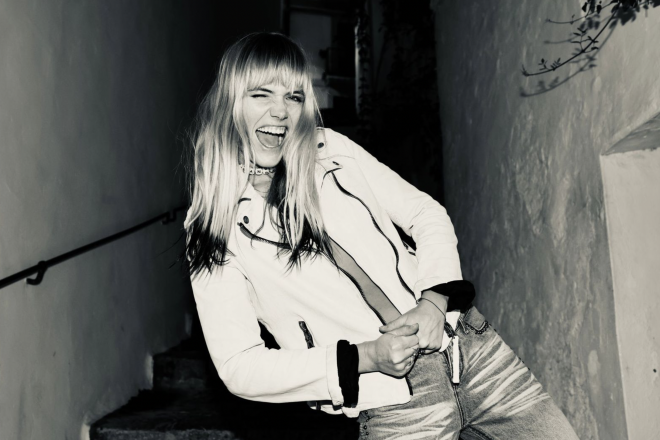
In recent years, Julia Sandstorm has emerged as one of the most compelling new voices in electronic music. With an especially busy 2025 behind her—marked by extensive touring across Europe, performances in settings ranging from intimate clubs to large-scale festivals, and a deepening connection to places like Ibiza and Burning Man—her artistic evolution is impossible to ignore. In this interview, Julia reflects on energy, presence, and flow, the personal and musical influences shaping her sound, and the importance of community, wellbeing, and creative freedom in a career that continues to gain momentum.
2025 has been a particularly busy year for you across Europe. When did you start to feel that your path as an artist was beginning to shift?
I think it’s been a combination of many things. Ever since I started playing, there’s been a steady increase in gigs and opportunities. A lot of them I owe to friends, our community, and other artists who have believed in me, supported me, and taken a chance on me. Often, one gig leads to more bookings, which in turn leads to even more opportunities.
I’d also say that many opportunities come from people seeing my live shows. All of these stepping stones really came together this year and resulted in one of the busiest summers I’ve had so far. That said, I definitely wouldn’t be where I am today without a lot of hard work and discipline—even though, when you love what you do, it doesn’t really feel like work
You spent much of last summer living in Ibiza. What does the island represent for you at this point, both creatively and professionally?
Ibiza has played such a big role in my life, both personally and professionally. I got married there nine years ago, and it was also the first place I ever played in Europe, which led to many more opportunities in other parts of the world. In many ways, a significant part of my life was born in Ibiza.
For me, every city and every country has its own unique energy and feeling. I feel different depending on where I am. Ibiza, in particular, is the place in the world where I feel the most creative and free. I can fully be myself there without being judged or put into a box.
As soon as I land, I feel my life force and creativity begin to bubble up. Ibiza has really been the starting point for so much.
Burning Man can be a very particular environment to perform in. What stood out most for you about those shows, on and off the stage?
This past year was my eighth Burn. During my first four Burns, I didn’t perform at all—I was simply experiencing what Burning Man is. For me, Burning Man has a similar feeling to Ibiza: the energy is incredibly creative, and it’s a place where I feel completely free. It’s also the one time of year when I truly unplug. Being off-grid and away from my phone allows me to be fully present and grounded, and I think that’s something most people experience out there.
Performing for an audience that is so present and connected to their bodies creates a very tangible energy. When you combine that with the creativity that fuels Burning Man, it becomes a truly extraordinary place to perform.
For me It’s also easier to tap into a state of flow there. Letting go of control and allowing creativity to take over comes naturally when you’re unplugged. That’s really the magic of Burning Man—going with the flow—and it’s the same with music. When you release control and trust the moment, that’s when the magic happens, and the audience can feel it.
Of course, the dust and climate are tough on equipment, so I’ve definitely experienced some unexpected gear failures while playing. But that’s all part of the adventure. Most of the time everything works fine, but when it doesn’t, you have to adapt, think creatively, and stay present—it definitely keeps you on your toes.
This year you’ve played in very different contexts, from KOKO in London to Brunch Electronik in Los Angeles. How do you adapt your approach depending on the space and the audience?
Before each gig, I usually do a bit of research on the venue or event, check out who else is on the lineup, and try to get a sense of what the energy might be like when it’s time for my set. If I have the chance to visit the venue beforehand, I’ll do that too—just to feel out the crowd and hear how the room and sound system come together when it’s full. That really helps me decide what I want to play and the kind of vibe I want to create.
I also adjust my set depending on the time slot. I approach things differently if I’m opening for someone versus headlining or closing the night. And if I’m closing, you can definitely expect a high-energy set. But above all, I listen and read the crowd - aiming to take them on a journey and see what they’re vibing with!
Energy and presence are often mentioned as defining aspects of your sets. Is that something you think about while performing, or does it come naturally?
It’s definitely something that comes pretty naturally to me, especially when I tap into a flow state. For me, that’s when I really feel the music and the audience, and they feel me right back—it turns into this shared energy between us. That’s honestly the best feeling in the world when you’re performing.
Of course, there are times when I don’t fully tap into that energy, and that can happen for different reasons. Even minor technical or environmental details can have a significant impact on flow. The height of the DJ booth, the acoustics of the room, or how the system is EQ’d. When that happens, I’ve had to develop little tricks to stop focusing on those things, get out of my head, and drop back into my body.
Touring can also be intense sometimes, especially with travel and limited sleep between shows. Because of that, dark chocolate has become my go-to energy boost before playing—not just for the energy, but as a little ritual to help me reach that flow state and connect with the crowd. It’s actually turned into a bit of a running joke with people I know and work with—and sometimes even with the audience, will bring me dark chocolate at shows.
How has your personal and musical background influenced the way you approach music today, both as a DJ and as a producer?
I would say that, above all, my parents and the experience of living in different places around the world have shaped me musically the most.
Both my mom and dad have been huge influences on me. Especially my dad—our connection and understanding of each other often came through music. As early as I can remember, he was introducing me to new sounds, mainly rock and indie music. He also bought me my first guitar when I was 12, which I still have in Sweden. So, both as a DJ and a producer, I’m definitely a sucker for guitars—electric and acoustic alike—and for rock and indie influences.
My mom, on the other hand, was a dancer when she was young, and she put me in dance school at the age of five. I was actually very close to pursuing dance as a career when I was 16. Because of that, I naturally gravitate toward music with a lot of rhythm and soul—it’s the kind of music that lets you express yourself and lose yourself, just like when you’re dancing. I try to capture that same feeling when I play sets and when I make music.
Your influences extend well beyond electronic music. How do sounds from genres like rock, soul or disco feed into your artistic identity?
There’s a lot of crossover and inspiration from all kinds of musical genres in electronic music. For me, electric guitars, dirty basslines, and a slight touch of acid give me a feeling similar to rock. That’s definitely something I seek out and love when I’m exploring new music. It’s also something I try to incorporate into my own productions, especially on some of the projects and releases I have coming up.
The same goes for other genres—certain elements, like a particular vocal or instrument, can evoke the feeling of genres outside of electronic music, like soul or disco. And every now and then, I even like to drop a straight-up rock or disco track into a set—it keeps things exciting and unexpected.
Community and support among artists has become an important conversation in recent years. How have relationships with other artists shaped your journey so far?
I’d say immensely—both as mentors and as friends. It’s really fun to be creative and share your passion with people you connect with. As mentors, Bora Uzer and LP Giobbi have been incredible supports for me. Bora has really believed in me and pushed me forward, and I’m forever grateful for all the opportunities he’s given me. Playing so many shows with him has been amazing—I feel like he’s taken me under his wing, almost like an older brother. Honestly, I owe a lot of my growth as an artist to him.
LP Giobbi has also been a huge supporter, both with music and just in general. She’s the person I reach out to whenever I hit a speed bump or have questions, and it’s been so comforting to have someone like that in my corner. I think it’s really important to have people in the same industry who’ve gone through similar things—it makes you realize you’re not alone in whatever you’re facing.
And lately, some of my newer girlfriends, who I’ve met through music, have quickly become close friends. It’s been so nice to have friends who live a similar lifestyle, and it’s even more fun being able to play together or get booked on the same lineups.
Looking ahead to 2026, what excites you more: discovering new territories or returning to places where you already feel a strong connection?
Both! There are so many places I’ve played that I can’t wait to go back to, but discovering new spots and playing there is always super exciting too. One of the new places I’ll be performing for the first time in 2026 is Brazil during Carnival—it’s been at the top of my bucket list for years, so I’m beyond excited about that.
Touring can be intense both physically and mentally. How do ideas around health and wellbeing fit into your daily routine on the road?
Health is my number one priority. Without it, everything else in life becomes harder, and it’s tough to truly enjoy life. I know that firsthand. I always prioritize sleep—I need about 10 hours every 24 hours, which is a lot, I know. Of course, it’s not always perfect, especially when I’m touring and some weekends I get very little sleep. But I make sure to catch up afterward, sometimes sleeping 15 hours or more.
I’m also very conscious about eating healthy, working out, and keeping up with my vitamins to stay strong and prevent getting sick. Supplements like Glutathione and NAD+ have been real game-changers for me. And for my mental health I like to start the day with 10 to 15 minutes of meditation and that really helps me feel grounded and positive. And when I’m feeling stuck or a bit low, I use positive mantras throughout the day to reset my mindset.
Between tours, I make time for acupuncture, saunas, spending time in nature, and detox routines to keep my body in top shape. All in all, my health—it’s a priority in everything I do.
