


Avision: The Long Game

There is a particular kind of confidence that grows through repetition, through nights spent reading rooms, through records that reveal themselves over time. AVISION belongs to that quieter lineage of electronic artists. His career has unfolded without the urgency that often defines contemporary dance music, moving steadily from New York’s underground clubs to an international circuit while resisting the temptation to reinvent himself for every passing trend. Listening to him speak, what becomes striking is not ambition alone, but an enduring belief that every decision carries responsibility.
“If someone has yet to hear me, I think they would quickly understand that I’m here for all the right reasons. I make and play music because I genuinely love it. I do this out of pure passion, dedication, and a deep respect for the craft. I take my profession seriously, especially when it comes to music. As important as it is to play something familiar, I believe it’s equally important to give listeners something they haven’t heard before. I feel that part of our job is to educate and inspire a crowd, whether I’m playing music or creating it.”
That word, responsibility, surfaces repeatedly throughout the conversation, although never as a slogan. For him, a DJ is not simply someone who maintains momentum across a dancefloor. The role carries an obligation to widen a listener’s perspective without breaking the connection that brought them there in the first place. It is a remarkably traditional philosophy for an era increasingly shaped by algorithms that reward familiarity over curiosity. There is almost something stubborn about continuing to believe that a dancefloor can still be surprised.
New York remains central to understanding where that outlook was formed, although not for the reasons electronic music mythology often suggests. The city appears less as a romantic backdrop than as an education in coexistence.
“New York has shaped so much of who I am, not only as an artist but as a person. Coming up in the city, especially at a young age, taught me to be open-minded and curious. The underground culture here was never about just one sound or one type of person. It was a mix of influences, communities and ideas all existing together, and I think that still has a huge impact on how I approach music today.”
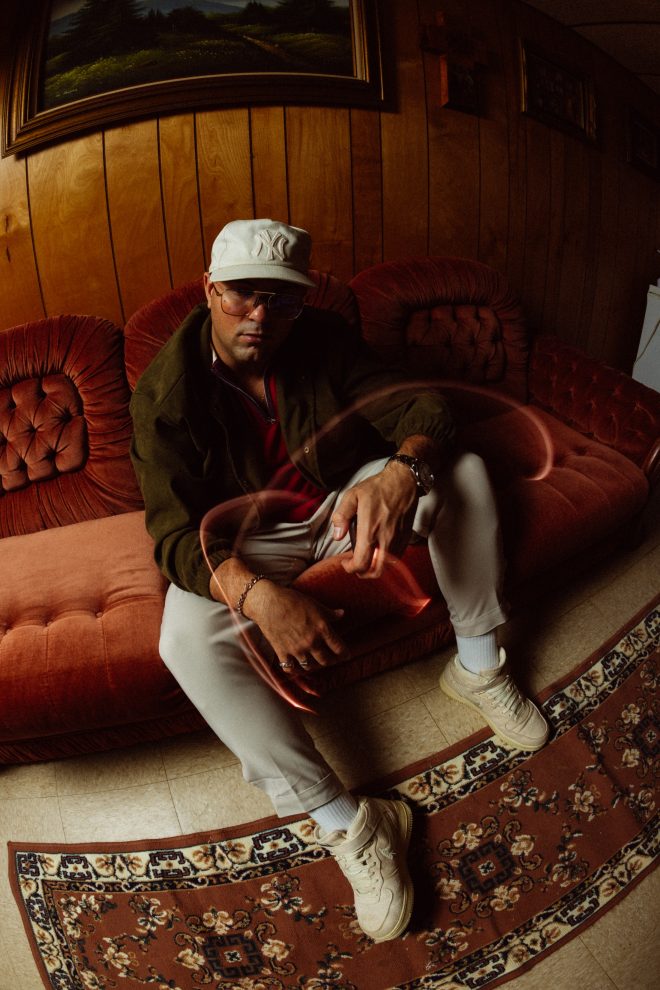
The city also taught him something less romantic and arguably more valuable. Underground culture depends on memory, but it survives through renewal. Every generation inherits a body of music that deserves preservation, yet simply repeating it eventually drains it of meaning.
“Behind the decks, I’ve always believed in giving people something familiar while also introducing them to something they may not have heard before. That comes directly from growing up around New York’s underground culture, where discovery was such an important part of the experience. There was always this sense that a DJ had a responsibility not only to make people dance, but also to educate the crowd and take them somewhere.”
Contemporary electronic music often celebrates freedom above all else. DJs are encouraged to break rules, blur genres and constantly reinvent themselves.
Perhaps that explains why his answers repeatedly return to memory instead of performance. A record heard for the first time, a connection formed without words, a night that quietly embeds itself into someone’s personal history.
“Music has the power to become part of someone’s memory, and knowing that I can play even a small role in those moments is incredibly special to me. At the same time, I understand that this is all supposed to be fun. I’m giving someone an experience, and that’s another reason why I love what I do.”
AVISION’s story begins there, inside a city that taught him curiosity before certainty and responsibility before recognition. Everything that follows, from the studio to the label he would eventually build, grows naturally from those early lessons rather than departing from them. The long game rarely announces itself in advance. More often, it reveals its shape only after enough years have quietly passed.
Rhythm comes first. It is less a habit than a physical instinct, shaped by years behind a drum kit and reinforced by an understanding that movement precedes emotion on a dancefloor. Before a record can say anything, it has to breathe. That first pulse becomes the foundation upon which everything else is allowed to unfold, even if the destination remains completely unknown.
“When writing a new record, I’ll usually start with the rhythm, as I’ve always felt that’s the foundation of house music. Being a drummer, I tend to seek out new drum kits that inspire me and start building a groove I can connect with. A lot of the time, I’ll get a bass groove going and write my bassline from there, or pull inspiration from something I’ve sampled. The creative process is always different for me on every track I make. Sometimes I have an idea, and sometimes I go in blank.”
Producers often describe the studio as a place of revelation, waiting for inspiration to arrive with cinematic certainty. For AVISION, curiosity replaces mysticism. The point is to remain open long enough for something unexpected to emerge instead of forcing an idea simply because the session has already begun.
Building Something That Outlives the Record
His latest single, This Time, reflects that philosophy without announcing itself as a dramatic shift. It is not presented as reinvention, nor does it attempt to distance itself from the records that came before it. Instead, it feels like a conversation between different chapters of his musical life. Disco textures surface naturally beside contemporary house production. Familiar influences remain visible, yet they avoid slipping into nostalgia. The record looks backwards without becoming trapped there, treating history as material rather than destination.
“The track represents who I am musically and really shows my roots. I grew up listening to disco and house music, so having those influences come through on the record really showcases who I am as an artist. I think it represents where I’m at right now, taking inspiration from the music that shaped me, but putting my own modern spin on it.”
Dance music has always had a complicated relationship with heritage. Every generation claims to be moving forward while quietly borrowing from the past. The difference lies in how openly those influences are acknowledged. This Time doesn’t disguise where its DNA comes from. Instead, it accepts that identity is built through accumulation. Years spent listening become years spent making. Sounds once absorbed as a teenager eventually return transformed by experience rather than imitation. There is no anxiety about appearing contemporary because the record never chases contemporaneity in the first place. That approach also explains why releasing the single through Ground Rule Records felt less like a strategic move than an inevitable one
“Releasing it independently through Ground Rule Records felt like the right move because it gives me the freedom to trust my instincts and put music out that genuinely represents me. With this record in particular, everything felt aligned. The sound, the timing and the direction I want to take the label. It feels like a statement of where I’ve come from, where I am now, and where I’m heading next.”
Record labels once functioned as cultural filters. Their catalogues reflected a point of view as much as a roster, creating identities that listeners could follow long before algorithms began making those decisions on their behalf. That relationship has become less predictable in recent years. Artists launch imprints for practical reasons, distribution has become increasingly accessible and the distinction between label, brand and media platform continues to blur. Ground Rule enters that landscape without trying to recreate an older model, yet it also refuses to exist as a simple outlet for AVISION’s own music. The ambition is noticeably broader. The records matter, but they are only one part of a larger ecosystem he has been quietly assembling.
“The inspiration really came from wanting to bring everything I love in life into one brand. I’ve always loved bringing people together from different cultures, professions, creative disciplines and walks of life, and I felt like there was no better way to do that than through all the things I genuinely care about. Music, events, fashion, art and New York culture. My goal with Ground Rule has always been to create a platform for different forms of art and expression, while bringing in people I deeply respect creatively.”
There is also a quiet rejection of exclusivity embedded within the project. Underground culture often speaks about community while simultaneously protecting invisible boundaries around who belongs. AVISION’s language moves in the opposite direction. He repeatedly returns to openness, collaboration and curiosity without presenting them as branding exercises. The objective is to create enough space for unexpected encounters to happen inside it. That ambition may sound idealistic, but it is grounded in the same philosophy that shapes his sets. Discovery only matters if someone is willing to introduce people to something beyond what they already know.
“I want it to be a space where different worlds can intersect naturally, where people can connect, collaborate and be exposed to ideas or perspectives they might not otherwise come across. Ultimately, I hope to build a community that feels open, inspiring and authentic, one that isn’t defined by a single scene or industry, but by a shared respect for creativity, culture and bringing people together.”
Running a label inevitably changes the way an artist thinks about music, although perhaps not in the way many expect. Ownership is often described as complete creative freedom, a place where compromises disappear. His perspective remains remarkably practical.
“It hasn’t changed me too much because I never really changed my sound to fit a label. I’ve always kind of done my own thing and hoped the music would naturally fit the label I was shopping it to. I think running my own imprint has just reinforced that mindset and given me an even greater appreciation for creative freedom.”
That answer quietly dismantles one of electronic music’s favourite myths. There is a widespread assumption that artists eventually discover their true voice only after becoming independent. In reality, many have already spent years negotiating with themselves long before they negotiate with labels. AVISION’s catalogue reflects that consistency. Different imprints provided different contexts, but the records rarely feel engineered to satisfy someone else’s expectations. Ground Rule did not create that identity. It simply removed another layer of permission from the process.
“It’s made me more aware of the responsibility that comes with putting music out and supporting other artists. When it’s your own platform, you’re not only thinking about your own work. You’re thinking about how you can create opportunities for others and build something that has a real identity and purpose. For me, the role of an artist today goes beyond just making music. It’s also about contributing to the culture, supporting the people around you and creating space for new ideas without losing sight of what makes you authentic in the first place.”
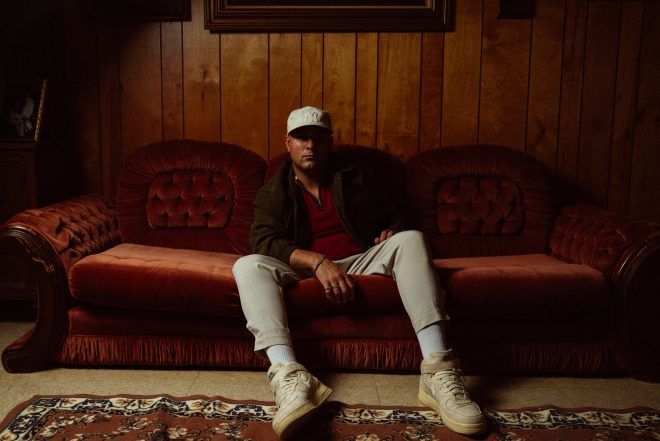
Instead of treating consistency as creative safety, he sees it as the condition that makes experimentation possible. You can only take meaningful risks once you understand the foundation beneath them.
“I think for me it’s always been about genuinely loving what I do and staying true to myself. I’ve never been too focused on chasing trends or trying to have one big moment. Of course, you always want to grow and reach new levels, but I’ve tried to let things happen naturally and build something that feels real over time.”
It is easy for artists to claim they ignore trends. Much harder is recognizing how subtle those pressures have become. Algorithms reward familiarity. Social media rewards immediacy. Streaming platforms reward frequency. None of those systems explicitly tells artists what to make, yet together they create an environment in which creative decisions are increasingly shaped by visibility rather than curiosity. New ideas gradually enter the music without demanding that everything preceding them be discarded. Evolution appears as continuity rather than rupture. It is a slower process, but perhaps a more sustainable one.
“I think longevity comes from constantly evolving without losing your identity. I’m always listening, learning, discovering new music and being inspired by what’s happening around me, but I never want to force myself into something just because it’s popular at that moment. Trends come and go, and I think if you spend too much time chasing them, you can lose sight of why you started in the first place.”
Ground Rule now becomes part of that longer trajectory rather than a separate chapter. The label expands his responsibilities, but it also expands the ways in which ideas can circulate. Collaborations extend beyond music. Different creative disciplines continue to intersect. The project grows without appearing hurried. There is no suggestion that everything has already taken shape. If anything, AVISION sounds more interested in building frameworks than finished monuments. The future remains valuable precisely because it has not yet been fully defined.
“What excites me most is the feeling that there’s still so much more to explore. I feel like I’m constantly evolving, and the best of me hasn’t surfaced yet, not only as an artist but as a person, and naturally that finds its way into the music. I’m excited to keep pushing myself into new territory, experimenting with different sounds and influences, and not feeling limited by what people might expect from me.”
“With Ground Rule continuing to grow, I’m also excited about building a bigger creative world around the music and collaborating with people I really respect across different disciplines. For me, it all connects, and I think those experiences will continue to influence the way I approach my own sound, and the brand itself. Over the next few years, I hope people hear more depth, more confidence, and maybe sides of me they haven’t heard before. I want the music to keep evolving without losing the feeling and identity that have always been at the core of what I do. More than anything, I want people to hear that I’m still curious, still taking risks, and still genuinely excited about creating.”
Perhaps that is the quiet lesson running beneath everything he says. Dance music has always been obsessed with the next record, the next weekend and the next breakthrough. AVISION seems more interested in what remains after those moments pass. he understands they are temporary by nature. The work that lasts is rarely the loudest. More often, it belongs to the artists who continue showing up long after the noise has moved somewhere else, still listening, still learning and still trusting that the long game is worth playing.
